Wonder Wednesday 13: Honeycomb Exploration Refreshed
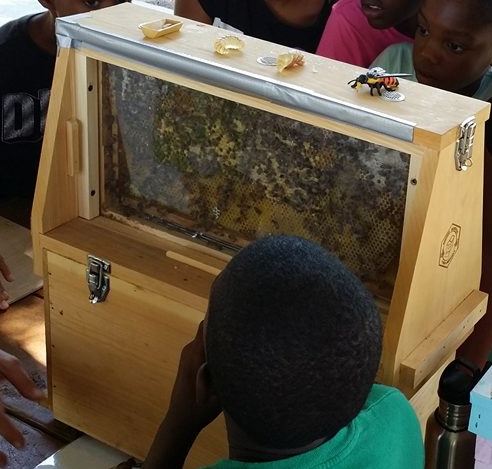
Sweet Honeycomb!
The honeycomb is a magnificent construction that has been the muse of artists, architects, and engineers for centuries. It’s hexagonal design is amazingly strong and perfectly efficient for both the bees’ honey storing needs as well as many human building needs.
Each 6 sided cell is a 3 sided pyramid on the bottom that once filled, is sealed by a flat wax cap. This is a great lesson to integrate math and geometry into your nature and garden work - and it's a tasty one too!
This lesson is inspired by, and adapted from, one of the best nature books of all time - The Handbook of Nature Study by Anna Botsford Comstock. It's been in print non-stop since 1907! And when Cornell wouldn't publish it because she was a woman (or hire her officially as a professor) she published it herself!
Historical context lesson ideas:
Honeycomb has been revered by both ancient and modern cultures as “mathematically excellent”. Use this as a jumping off point for a study of the hexagon and the pyramid in math and geometry and for a history or cultural research study on the importance of bees in various cultures through history, such as the Greeks and Egyptians the use of hexagonal and pyramid structures in these societies.
Discuss some human uses for bees wax (candles, cosmetics like lip balm, as a lubricant on household items like screws, hinges, and drawers, art sculptures, soap furniture polish, and even in some foods).
Historically, what could comb bees wax have been used for? (embalming, as a way to seal things up, sculpture, polish.) Then make rolled beeswax candles from sheets of beeswax. These make great gifts or fundraiser items.
Bees as Activists:
Engage 6- 12, and even 12-18, year old students' moral reasoning with an exploration of bees, feminism, & politics!
Bees can be used a a jumping off point for political and feminist studies! Beehives are matriarchal societies in which the female bees do all the work including: building of comb, pollen collection, honey production, and rearing of young. Politically, bee hives are considered to have “perfect government and management of the bee community… where the citizens do all the governing without voting, and where the kings are powerless and the queen works as hard and longer than any of her subjects…the pages of history tell no account of a republic so wonderful as this; yet the nearest beehive is just the home of just this sort of government. Bees are the perfect socialists. They have noncompetitive labor, united capital, communal habitations, and a unity of interests. ” (Handbook of Nature Study, p. 391).
Ideas of fairness, as well as comparing and contrasting of ancient and modern societal structures, can be explored in relation to political systems. Older students can compare - would the bee's socialist system would work for humans? How is it similar or different from human socialist systems past and present? How is it different since bees don't choose their societal system?
Bees have a natural instinct for systems thinking, rather than prioritizing individual choice. How does that affect their environmental impact and pollination - for humans and all nature?
Bee colonies can even be used to initiate a natural look at and discussion of caste systems, and how in the bee colony it works to benefit the bee society, but why caste systems don’t fare well for all in human society.
Wonder Wednesday 13 - Refreshed - Honeycomb Exploration
Materials
Honeycomb with honey, these are available from beekeepers and can be purchased from the beekeeper at a local farmers market or many natural food stores also carry honey on the comb.
Magnifying lenses for each child or group
Nature Journals for each child
Pencils
Optional: can be acquired from a local beekeeper with advance notice
Empty "bee made" wax comb
A "man made" honeycomb frame, such as that from a Langstroth hive
A live demonstration hive or a non-live teaching hive
An actual beekeeper to speak about bee hives
Preparation
Be sure you have enough comb for all the children to observe - and taste - in either groups or as individuals.
You may want to create research templates with the observation questions.
Prepare to begin the lesson by initiating a discussion of the beehive structure using the materials and resources that you have acquired (& possible beekeeper).
If you have secured a teaching hive, an empty comb frame, some empty wax comb, and or a beekeeper to come with a live demonstration hive:
Begin with the beekeeper and live hive or empty teaching hive (of course), followed by the empty bee made wax comb, followed by observation of the the man made comb frame, and ending with the honey filled comb.
(Things will get sticky and very energetic once they begin licking the honey off their fingers!) Inspire them with the real bee made constructions and then compare the bee made to the man made comb constructions.
Procedure
After a discussion of the beehive, dismiss the children to their seats or into groups for independent hands-on comb observation and recording through words and pictures in their nature journals.
Guide the students with the following, or similar prompts:
Look into the Empty wax comb.
What shape is the cell?
Looking down into the cell, what shape is the bottom of the cell?
In the hive, is the depth of the cells horizontal or vertical?
How to the bottoms of the opposite cells join? Why do you think it is important for bees to maximize every bit of space in their hive?
How does the comb smell?
If using a man made comb frame, compare the man made comb with the bee made wax comb. How are they similar, how are they different?
Why do you think that some beekeepers use man made frames in the hives (Langstroth and commercial hives) rather than letting the bees make their own combs (top-bar, skep, and warre hives all allow bees to make their own comb)? (for maximum honey production and harvesting)
Pass out the comb with honey.
Now look into the comb containing honey. How does the honey stay in the cells?
Carefully remove a wax cap from a cell. Was the cap difficult to remove?
Think about your previous observation of whether the honey is stored horizontally or vertically. Does this cap create an efficient seal for (horizontal) honey retention?
Can you see the 6 girder structures that extend down from the cap to support the cell.
What purpose are these cells used for other than storing honey? (The storing of beebread and as cradles for the young bees. Bee bread is a mixture of pollen, honey and or nectar, enzymes, and bacterial organisms that is made into little balls and is a protein source for the hive. It is sold as a nutritional supplement to humans as Bee pollen granules.
How does the honey filled comb smell compared to the empty wax comb? Did the wax comb smell sweeter before you smelled the one with the honey?
Allow the students to press honey from the comb and taste the honey! Also show them how they can chew the wax, reminding them to spit out out once they have chewed or sucked all the honey out.
Have fun with this! It’s beautiful, artistic, smells and tastes good. It is honey comb after all! What could be sweeter?
Seeds to Sprout
Hear from a Native Bee Expert!
Lore The Wonderful World of Native Bees: A Guest Post by Jamie Pawelek. I am so lucky to have this 2013 guest post in the Wonder Wednesday archives! Jamie is a wealth of knowledge and inspiration in all things wild bees in nature! Get ready to be wow'd and have your outlook on native bees expanded!
Light Up the Night with Beeswax!
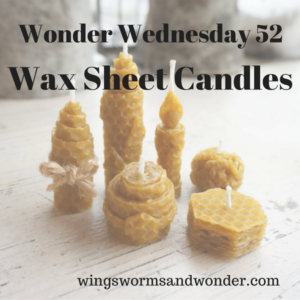
Beeswax candles are so cozy, sweet smelling and easy to make! Try out this Wonder Wednesday 52 activity and roll up some beeswax sheet candles yourself! It a fantastic project for multiage groups!
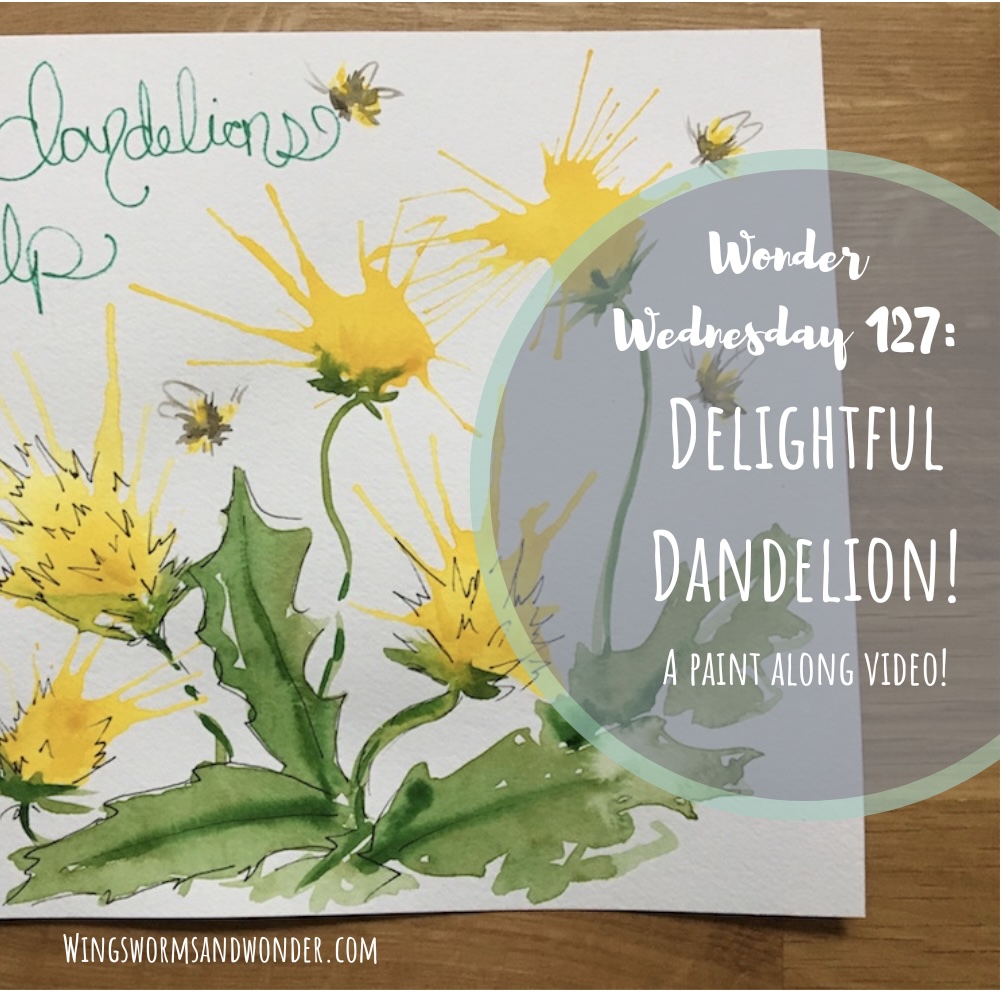
Watercolor Bees and Flowers!
Learn to paint some fun little watercolor bees - and learn a bit about why dandelions are so important for bees in early spring in this Wonder Wednesday 127 Delightful dandelion paint along!