Wonder Wednesday 7: Abstract Nature Prints
The Story
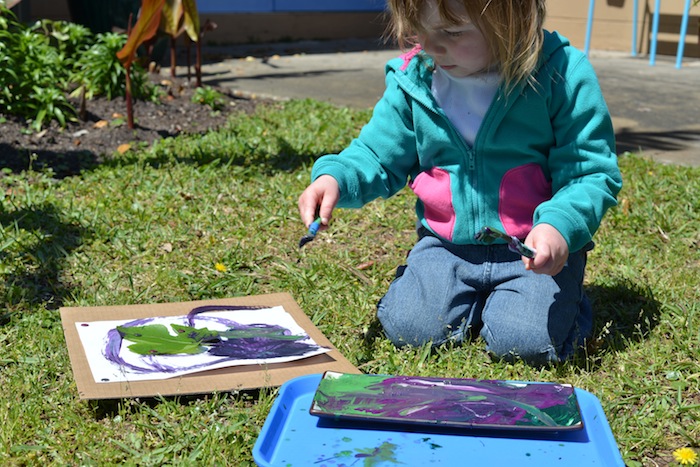
Well this little cutie just turned 16 - so that's how many years ago I first created this project! She is still very into the arts - and having fun in nature - so I must have had some good auntie influence!
This project is my 2nd most fun way to make leaf prints. (In my first book, Wings, Worms, and Wonder I cover my 1st favorite way, cyanotype.) Paint prints are a much more simple style of subtractive type leaf print that can be done with a wide variety of age groups and nature materials - depending on how you set up the activity.
It's great on the fly for ages young and old because you only need supplies generally found around the yard, home, and classroom.
If you're in the classroom or homeschool, I recommend correlating this activity with a study on abstract expressionism, and as an extension for botany lessons (including the “Leaf Matching” lesson from by Book Wings, Worms, and Wonder's “On the Soil” chapter).
What is Abstract Expressionism?
Abstract Expressionism (citation) is a movement in American painting that flourished in New York City after World War II, and is sometimes called as action painting. The Abstract Expressionists resist a cohesive style; and instead, the artists shared an interest in using abstraction to convey strong emotional or expressive content.
Abstract Expressionism is best known for large-scale paintings that break away from traditional processes, often taking the canvas off of the easel and using unconventional materials such as house paint. Some of the most well know abstract expressionist artists include: Jackson Pollock, Willem de Kooning, Franz Kline, Lee Krasner, Robert Motherwell, and Mark Rothko.
Action Jackson is an appropriate book for children on the artist Jackson Pollock.
Plant ID:
Bringing plant/leaf ID into the project adds an additional layer of depth and learning to the anything goes art making style. Use field guides as well as online sources to discover more about the leaves you see each day around town. When we know a plant by name we can better care for it and the habitat that supports it and us.
Leaf identification from the Arbor Day Foundation site
Tree identification through leaves
Wonder Wednesday 7 - Refreshed
Abstract Expressionist Leaf Prints
Materials
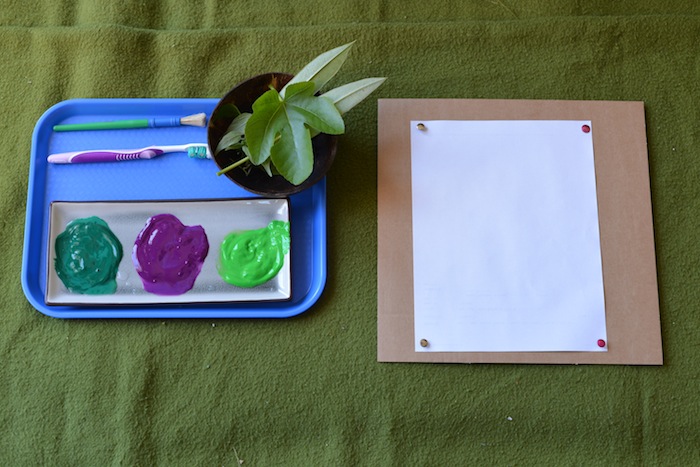
Tempera, acrylic craft paints, or liquid watercolor paint
A palette or little bowls that brushes can be dipped into
Brushes- both old toothbrushes and paintbrushes for creating different effects (If you really want to get technical, harder grade toothbrushes create a better spray than soft, but really just use what you have.)
Paper (mixed-media or paper that can hold a lot of paint without tearing)
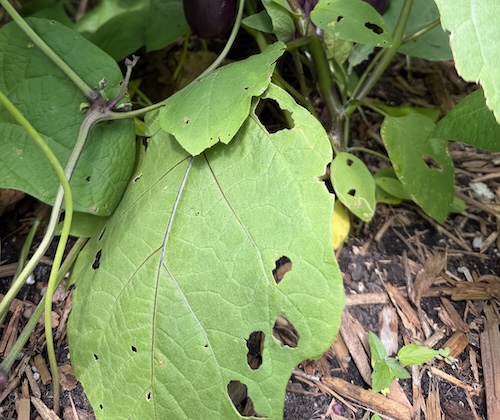
Leaves (all shapes, sizes, and even with holes can be cool)
Push pins
Pieces of old corrugated cardboard, slightly larger than your paper
Optional:
A large drop cloth (if you are doing this inside or on a surface you don’t want covered in paint)
Smocks
latex gloves (for those that don’t want to get paint on their hands)
Preparation
Take a nature walk and collect a variety of leaves.
Prepare your paint - Paint should be mixed well and on the thinner side, but not watery. The thinner the paint the easier it will spray and flick off the toothbrush. This will create more defined edges around the leaves almost like an airbrush. A little thicker paint can be used for flicking off the regular brush for added interest, but too thick will just blob and clump.
Optional:
Younger children can sort the leaves by size, shape, and or color.
Older students and adults can research the types of leaves collected and the shapes and margins of each leaf. Record these observations in nature field journals. This can be the beginning of a more in-depth research project on a specific type of tree.
Procedure
Choose a color scheme of around 3 colors.
Pin the piece of paper to the cardboard.
Arrange the leaves and carefully pin them down to the paper.
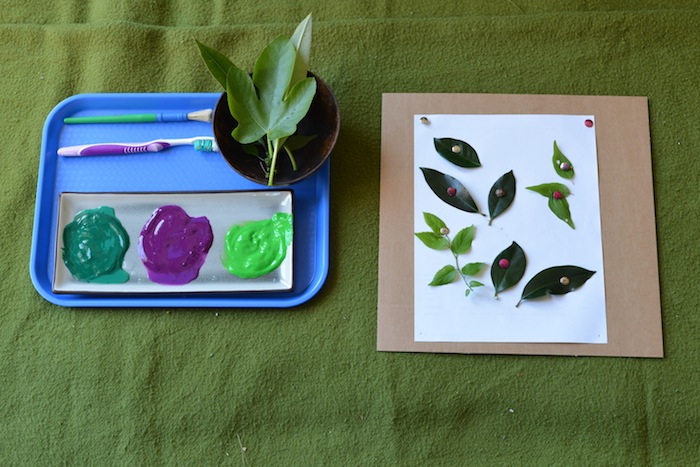
Paint should be very thin and runny, but mixed well. The thinner the paint, the easier it will spray and flick off the toothbrush.
Thinner spray will create defined, more detailed edges around the leaves - almost like an airbrush.
A little thicker paint can be used for flinging off the regular brush for added interest.
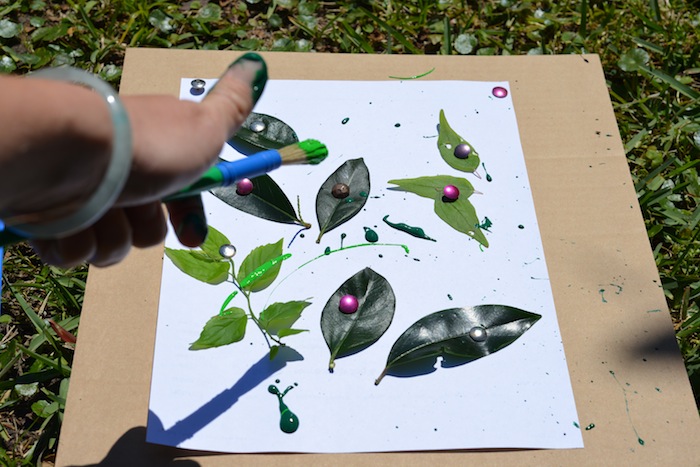
Bring paper, brushes, and paint (to the drop cloth or) outside,
Set the cardboard/pinned paper down,
dip the brush into the paint and flick paint off the brush onto the paper.
If using a toothbrush, with bristles facing up but aiming the brush toward the paper, use your thumb or a palette knife to scrape the bristles TOWARD you (or UP if the brush is turned sideways as in this pic), flicking paint onto the paper in a finer spray.
Scraping the bristles away from you will flick the paint onto you!
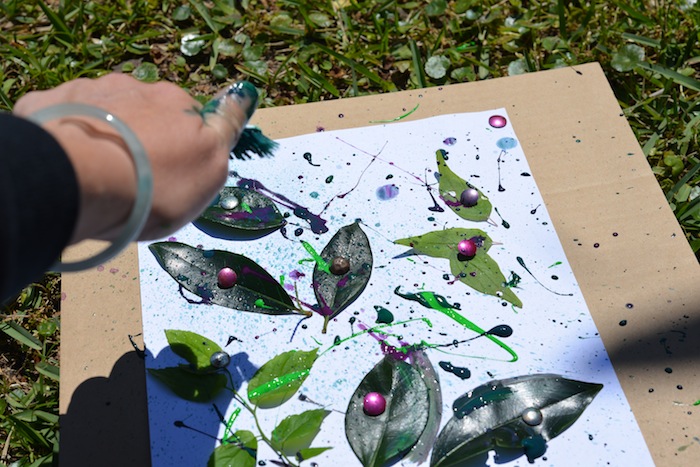
Notice how the thinner paint creates a more fine spray and the thicker paint creates larger more defined marks/blobs/lines. Play with the look of both.
Be sure to focus on getting a lot of fine paint spray around the outer edges of the leaves so the margins come out clearly - or play with some distinct margins and some more ambiguous.
Once the paper is covered in a way that is aesthetically pleasing, yet clearly defines the leaves, set the cardboard/paper out to dry. You can decide how thick or thin you want the paint.
You can also add more layers of paint even if the print is already dry.
Keep it loose and have fun with it!
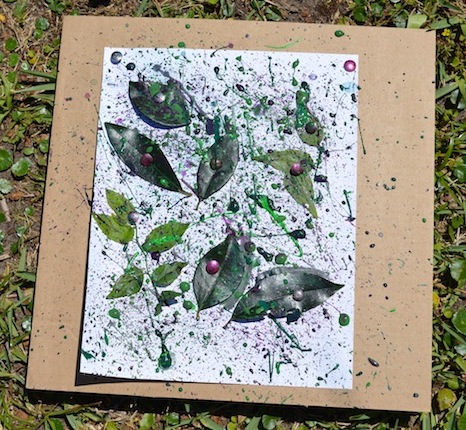
Once completely dry, remove the pinned leaves and unpin the paper from the cardboard.
Optional: Mount the print onto a larger piece of coordinating color construction paper as a frame to create a defined border around the print, and add visual stability to the action packed painting style.
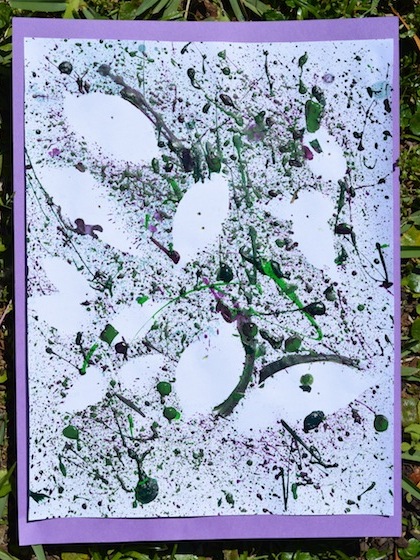
Notice how the leaves leave the negative space of the paper white.
I only had access to more ovate shaped leaves, but a variety of shapes would look very nice.
Seeds to Sprout:
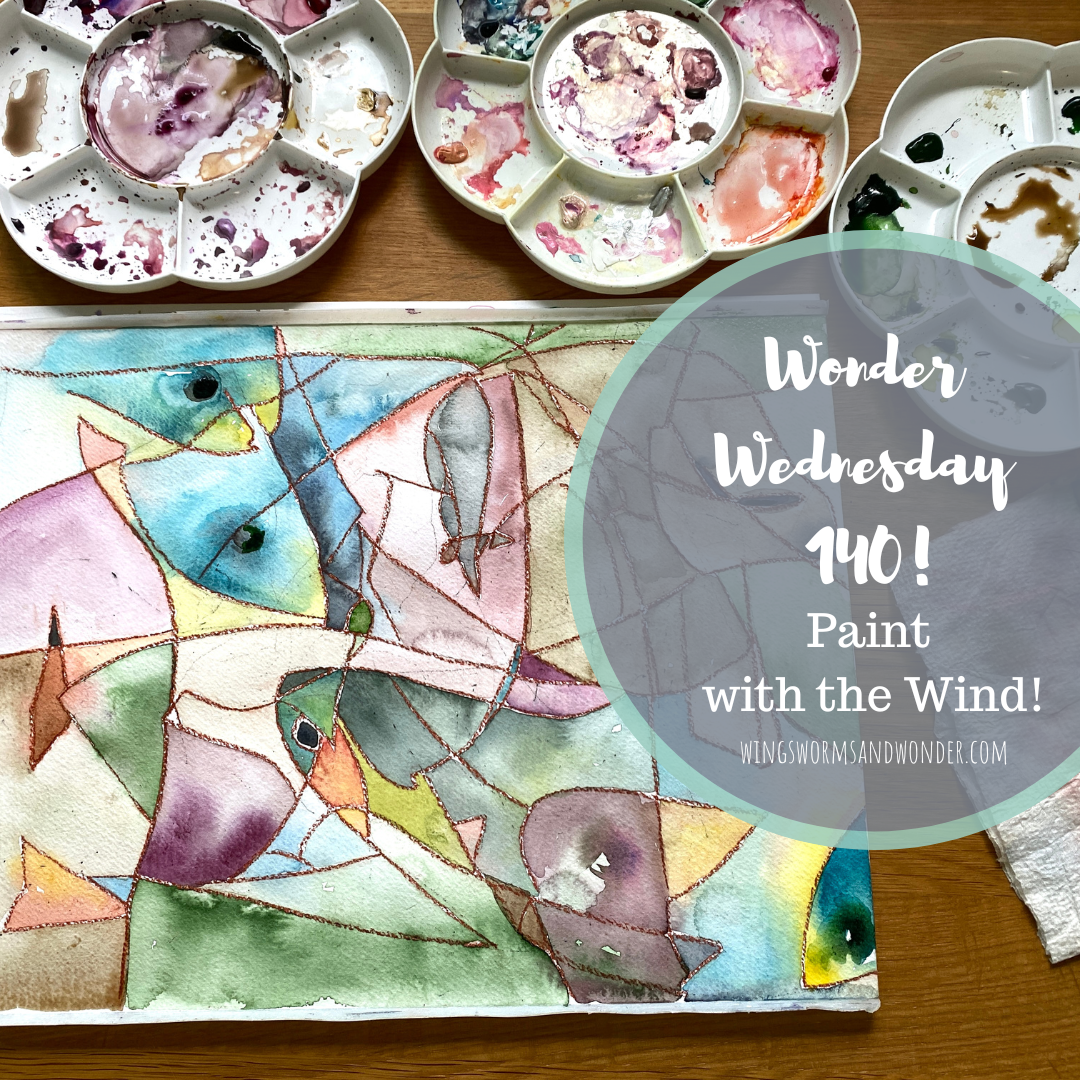
Paint with the Wind!
In this Wonder Wednesday 140 project we invite the wind to collaborate with us in an abstract Paul Klee inspired nature painting!
Color Exploration
Wonder Wednesday 120 takes us on an abstracted color journey - exploring all the tints and shades a single hue can offer on a single page!
Shady Abstractions
Join with the shadow side of nature and have some fun drawing shadows to create abstract images in this Wonder Wednesday 98 project!